
Campbell County Deed Record Types
The Circuit Court Clerk serves as Campbell County's legal recording custodian for deeds, deeds of trust, mechanics liens, plats, and miscellaneous land instruments. The office also dockets judgments and UCC statements. Not every record transfers ownership. Read the document type before treating an index result as a conveyance of the parcel.
| Deed Type | What It Does | Common Use |
|---|---|---|
| Deed | Conveys an interest in land between grantor and grantee | Confirm the owner transfer and legal description |
| Deed of trust | Records a security instrument tied to real property | Review a loan-related encumbrance and later release |
| Mechanics lien | Records a claim associated with work on property | Check for a filing and any release or court outcome |
| Plat | Shows a recorded division or lot plan | Match a lot-and-block description to the land |
| Miscellaneous land instrument | Records another land-related filing | Read the actual instrument before drawing a conclusion |
A deed names the parties and the interest conveyed. A deed of trust, lien, or plat sits in the same land-record system but answers a different question. The index only points to a filing. Reading its terms, parties, description, and signatures takes the deed image, and a qualified title professional should handle any actual title decision.
Campbell County's Clerk also keeps probate, civil, chancery, judgment, and marriage records. Those are separate record families. One office holds them all. A probate file can explain authority for a later sale, but the recorded deed still controls what land changed hands. For the conveyance, check the deed itself.
Campbell County's Recording Clerk
The Campbell County Clerk of the Circuit Court records deeds, deeds of trust, mechanics liens, plats, and other land documents. The office sits at 732 Village Highway, P.O. Box 7, Rustburg, VA 24588. Court-listed hours run 8:30 a.m. to 4:30 p.m. Call (434) 332-9517 first. Ask about a specific book, case, or copy request.
The county's Clerk of the Circuit Court page lists the recorded land-instrument duties and contact details. The catalog goes beyond deeds. Wills, probate files, guardianships, civil and chancery matters, judgments, marriage licenses, and UCC work all run through the same office. An estate transfer may need a probate file too.
Use the Virginia Courts Campbell Circuit Court page for the counter location and court-listed office hours. Plan the visit around it.
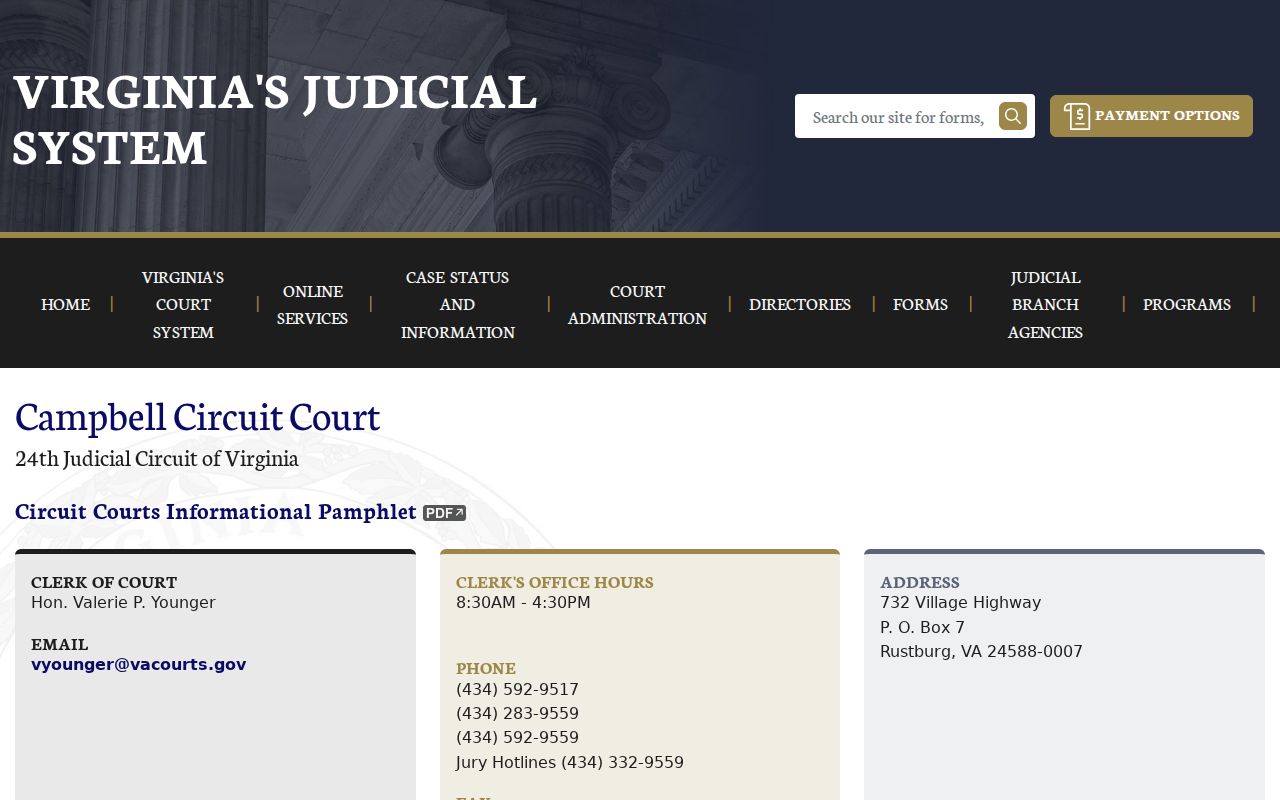
The court page helps with an in-person records visit. Call the Clerk to confirm copy needs. The county's official Clerk page lists the recorded land instruments and contacts.
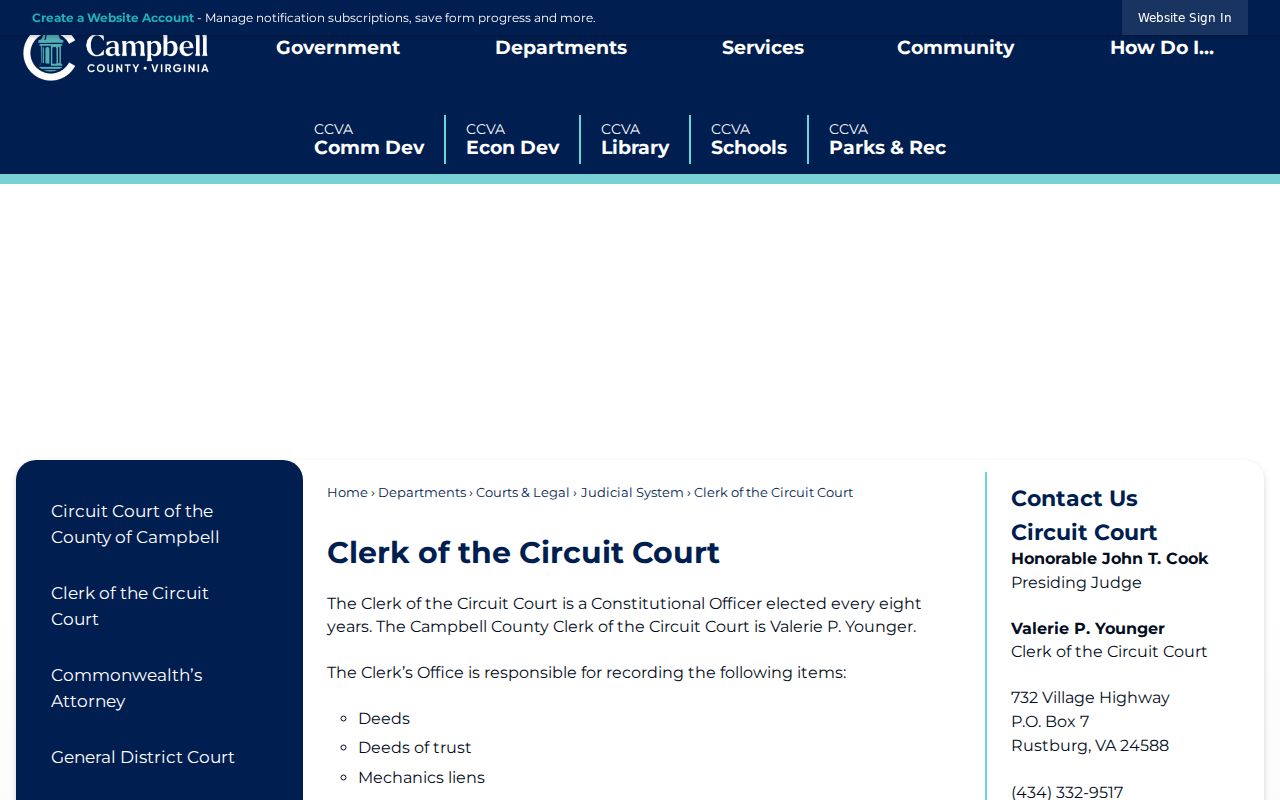
The clerk page confirms the office's current record scope. Check it before requesting a land record.
Using the Campbell County Grantor-Grantee Index
A grantor-grantee index sorts deeds by who transferred and who received. Each column answers one question. For a parcel already found in the Land Book, the owner name and deed reference point to the likely filing. The index is not an address search. A street name alone may not retrieve the instrument.
Virginia Secure Remote Access, called COVERS in some county material, offers a free index-only route where a court enables it. The county publishes no confirmed starting year for its online index. Field labels can change too. Carry the exact party spelling and legal description from the county parcel record into the search. Ask the Clerk when an online result stays unclear.
- Start with the Land Book deed reference or current owner's name.
- Read the grantee entry and open the instrument when image access is available.
- Note the grantor, recording reference, and legal description shown in that deed.
- If tracing title, search the prior grantee as a later grantor and continue backward.
- When the online run ends, move to the clerk's older books or the LVA catalog.
- Grantor
- The person or entity that conveys the interest.
- Grantee
- The person or entity that receives the interest.
- Chain of title
- The sequence of recorded conveyances for one parcel.
- Book and page
- A reference to where an instrument appears in a record volume.
Start Campbell's search at the Virginia land-record search portal.
The index screen starts party-name research. The deed image and legal description still control the reading.
Campbell County Index and Image Access
Virginia's SRA rules let a clerk open the land-record index at no charge while limiting images to authorized subscribers. Images may require a subscription. That route can mean a signed agreement. Payment goes to the local clerk. Campbell publishes no image fee or subscription terms online, and an index entry does not promise a viewable deed.
Use the Virginia SRA access page to follow the Available Courts path. If an image is restricted, ask the Campbell clerk about a counter copy or certified copy. Those are separate requests. Online image access, an office copy, and certification each carry their own rules.
Give the Clerk the parties, the approximate recording year, the document type, and any known book or instrument reference. Those details separate a deed from a similar filing. No earliest SRA year, image price, or turnaround time is published for Campbell. Ask the office directly. Never apply another county's fee schedule.
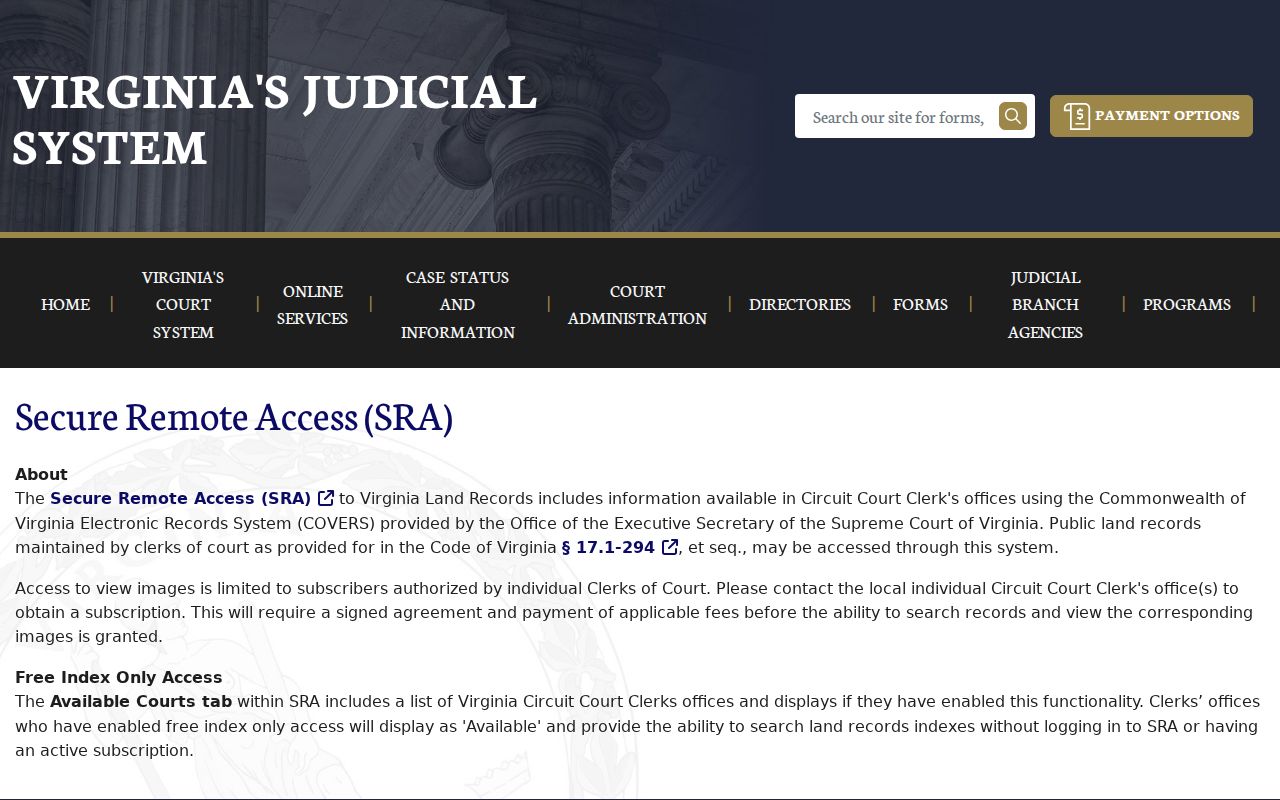
The SRA screen shows the statewide access split. It does not confirm Campbell County's enabled year range.
Requesting a Campbell County Deed Copy
Found a deed in the index? Write down the parties, the record reference, and the full legal description before you call. The clerk needs those details. Campbell County's page posts no complete fee schedule and no mail-order form, so ask the office about copy formats, payment, certification, and counter viewing.
The clerk's email, vyounger@vacourts.gov, appears on the Virginia Courts page alongside 8:30 a.m. to 4:30 p.m. hours. For older instruments, give staff the index name and record reference rather than a modern street address. That speeds the search. A certified copy is official proof of a filing. It is not a legal opinion about title.
Recorded, not guaranteed. The Campbell County index shows filings, not every possible interest. A deed copy is not a title opinion, and a title search is needed to assess ownership claims.
Campbell County Deed Books From 1782
Campbell County deed books reach back to 1782. The first book covers 1782-1784. Later runs include books 24-34 from 1841-1869, books 35-43 from 1868-1883, and books 65-67 from 1898-1900. Indexes split by role. General grantee indexes run A-K and L-Z for 1782-1896, while grantor indexes run A-J and K-Z across the same span.
The county itself dates to 1781. It was carved from Bedford County. Deed books therefore begin almost with the start of Campbell's separate county government, and a researcher can often work backward from a modern deed reference into the older volumes by following the names.
Start with the right half of the index. If a prior deed names someone as grantee, check the grantee half for that surname. Use the grantor half for what they later conveyed. Confirm each entry against the deed-book volume. An index points to a record but never holds the whole conveyance. The Library of Virginia's county catalog is a finding aid, not a promise that every record is digitized.
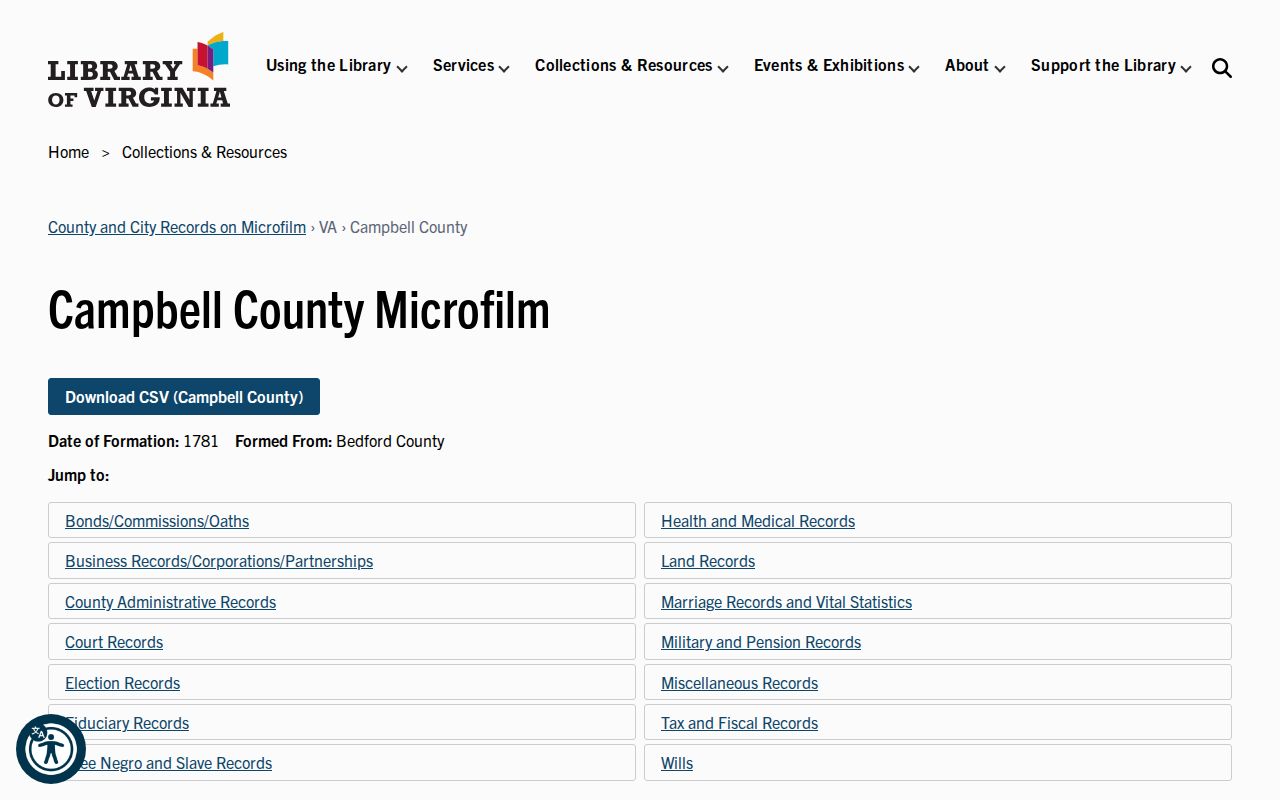
Ask the LVA or Campbell Clerk about a specific reel or volume.
Campbell County Plats and Estate Deeds
Plats tell their own story in Campbell County. The LVA catalog lists general plat-index runs from 1884 to 1981, with older plats tucked into deed books and wills. Pair any subdivision lot reference with the recorded plat. The online tax map may miss historic lot changes. Rural tracts often rest on metes and bounds rather than a numbered lot.
Estate divisions can shift names. Campbell's microfilm holds fiduciary bond books from 1850-1859 and 1870-1904, along with commissioner and receiver books reaching to 1981. Those records matter. Read the probate file and fiduciary deed together, since they explain a court-supervised transfer or trustee act that was never an ordinary sale.
Campbell County Liens and Deeds of Trust
Deeds of trust differ from conveyance deeds. A deed of trust, mechanics lien, judgment, or release each touches a different part of the record trail. Search the Clerk's land records for the instrument. Then look for a satisfaction, a release, or a court outcome. Campbell's official sources list no online delinquent-tax or foreclosure-sale calendar. Ask the Treasurer about tax status. Ask the Clerk about recorded notices or trustee deeds.
Entity debtors and UCC filings take a separate path through Virginia's SCC Clerk's Information System. The SCC reports UCC and federal tax-lien information, with CIS document images available for filings since October 1, 2003. The Clerk records local land instruments. The SCC holds the central business filings. The Virginia SCC UCC information page describes that separate route, while the SCC UCC service page shows how to reach central UCC and federal tax-lien records.
A name match proves nothing by itself. Confirm the parties, the filing, and the land description before assuming a parcel is encumbered by a financing statement.
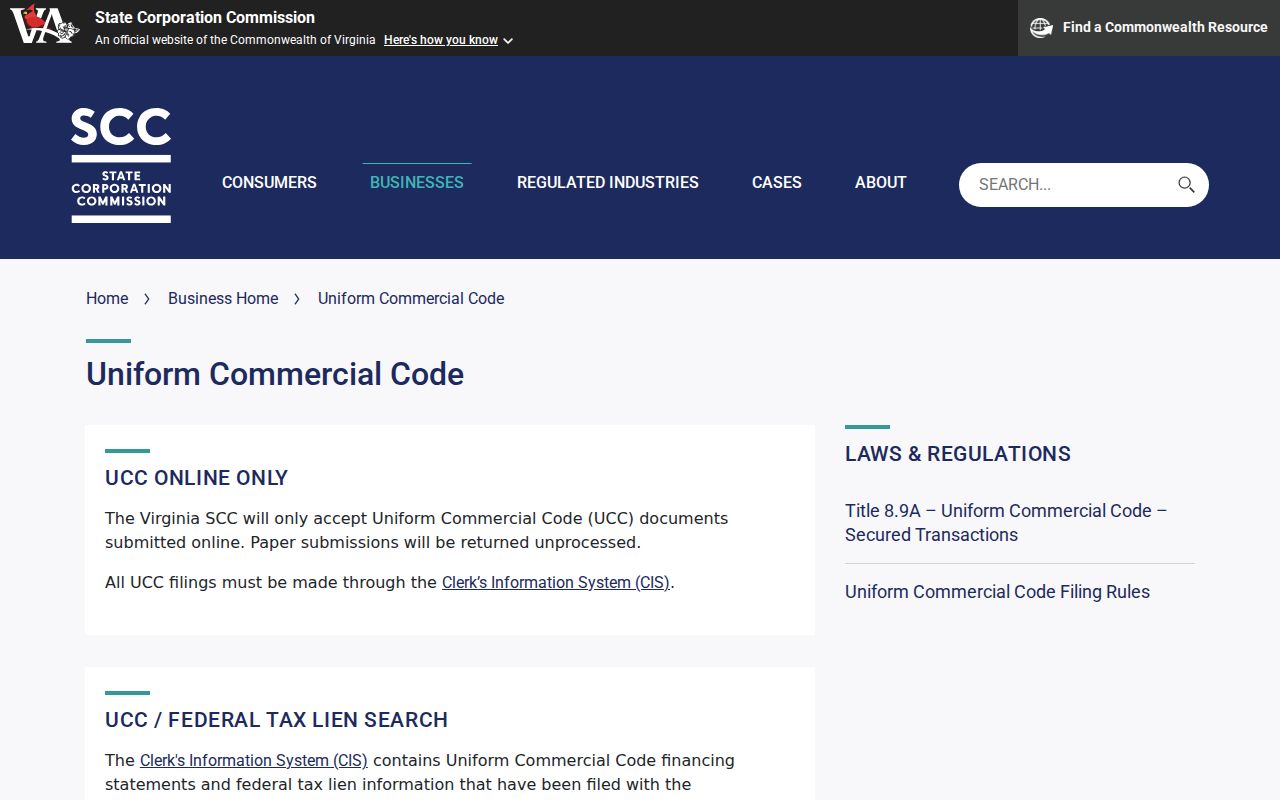
Statewide filings stay separate from the Campbell land index. Match every result to the right party and property.
Campbell County Deed Alert
Virginia Courts publishes a Campbell VA Deed Alert notice. It points residents with land-record questions to the Circuit Court Clerk. Treat the alert as a prevention and monitoring lead. It is no substitute for checking the recorded document itself. Does a filing look unfamiliar? Use the official Clerk number on the county or courts page to ask what the record shows.
For a suspicious deed or mortgage notice, preserve the document reference and call the local clerk at (434) 332-9517. The Campbell deed-alert notice comes as a PDF.