
Tracing Campbell County's Former Owners
The walk starts with the newest deed on the parcel. Pull five details from it. They are the grantee, grantor, recording date, document type, and legal description. The prior owner becomes the next name you search. Treat the table as a working outline, not a sample property history.
| Transfer Date | Grantor → Grantee | Deed Type | Book/Page |
|---|---|---|---|
| Newest recorded date | Current grantor → current grantee | Conveyance shown on the latest deed | Current instrument reference |
| Prior deed date | Earlier grantor → current grantor | Prior acquisition instrument | Earlier book/page or instrument number |
| Historic date | Prior owner → next grantee | Deed or fiduciary conveyance | Historic deed-book reference |
| Plat record date | Parties named on linked instrument | Plat or lot reference used by a deed | Recorded plat-book or page reference |
Begin with the Circuit Court Clerk's current index if it reaches the deed you need. Images can be unavailable. When that happens, contact the Rustburg office. For older owners, the Library of Virginia's county catalog lists land books, general grantor-grantee indexes, plats, and fiduciary records.
Campbell County Deeds Back to 1782
Campbell County was formed from Bedford County in 1781. Its deed records begin almost with the county itself. The Library of Virginia's microfilm catalog lists Deed Book No. 1 for 1782-1784, with later books covering the decades after, so the county's deed books offer a paper route close to the start of Campbell's recordkeeping.
Rustburg became the county seat in 1784. Jeremiah Rust donated fifty acres for the courthouse. For a chain reaching the early county period, hold the tract together with the names and land description from each deed. Addresses and owners change over time. The LVA Campbell County finding aid describes the microfilm collection.
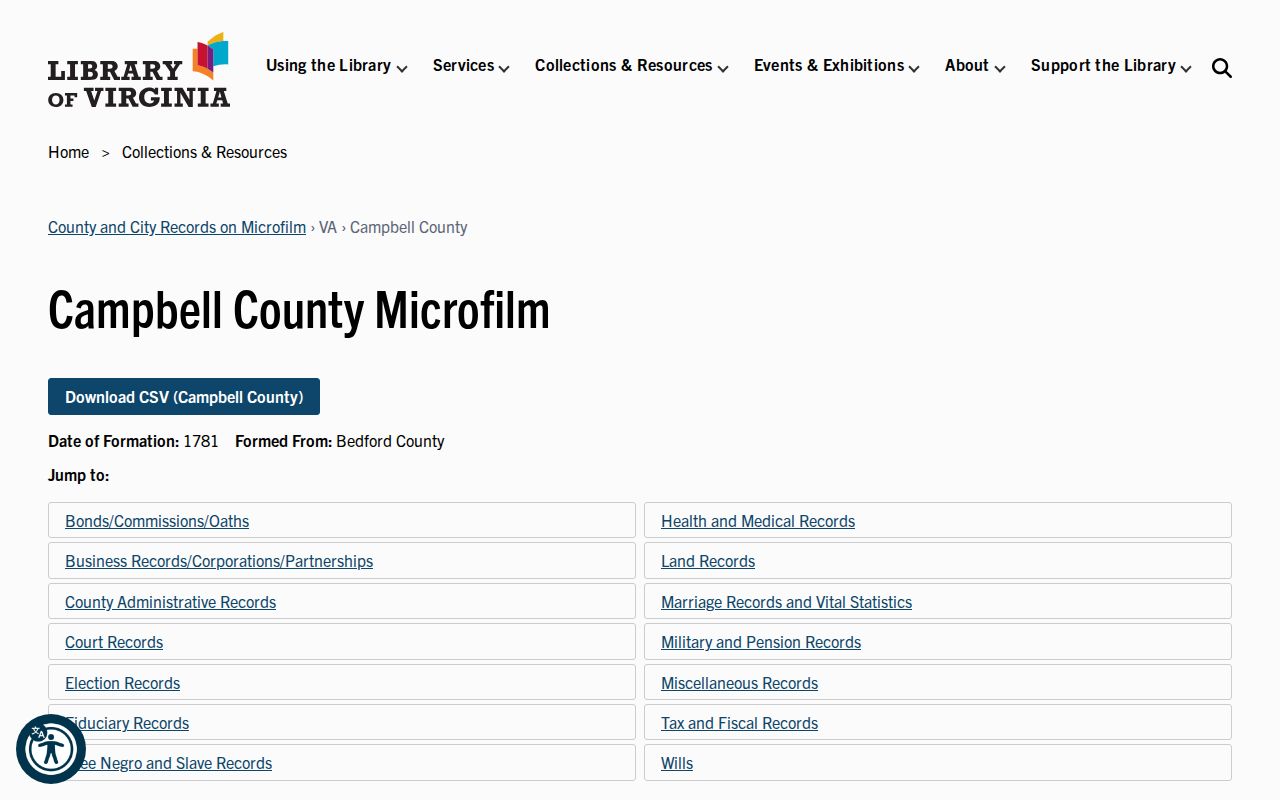
The catalog names the collections and their years. Ask the library or the Clerk how to view a particular reel or original volume.
Campbell County Indexes Through 1896
The general indexes split by surname and by role. Grantee indexes run A-K and L-Z. Grantor indexes run A-J and K-Z. Both series cover 1782-1896 in the LVA catalog. Those letter divisions matter once a researcher moves from an online name search to microfilm, so identify the correct half of the index before scanning for a surname.
Campbell County states no exact online cutoff. Do not read 1896 as the end of current online access. That year marks the verified span of the historic general indexes in the LVA collection, which serve as a fallback when the online index will not reach an older transfer.
Mind the index role as well as the letter division. The land's arrival is indexed under grantee. The transfer out sits under grantor. Note each deed-book reference and follow the legal description into the next instrument. The alphabetic index alone never proves the same tract was conveyed. Virginia SRA guidance explains that image access can be controlled by the local clerk even when a name index is available.
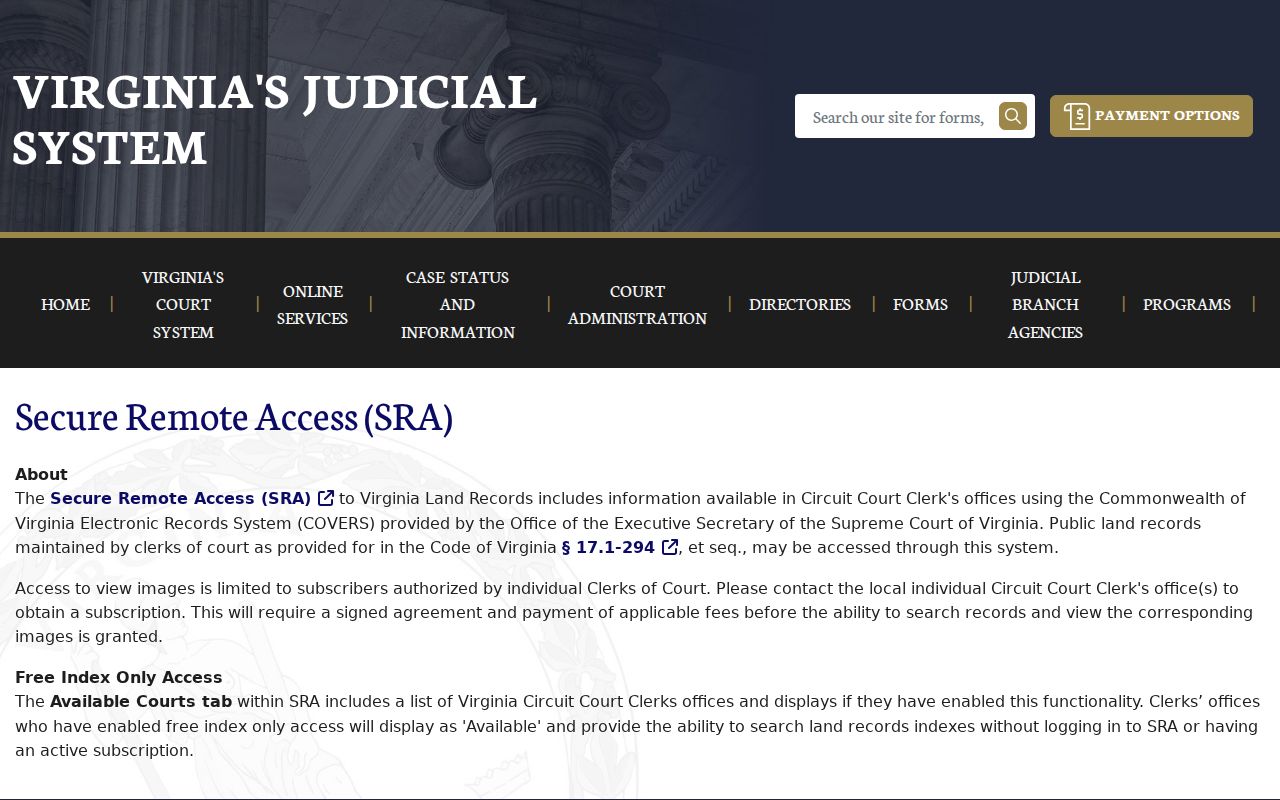
Check with the clerk for Campbell County's current index and image years before picking a search route.
Walking Campbell County's Deed Chain
Every deed hands you the next search name. Begin at the current conveyance, read the prior grantor, then locate that person's acquisition deed as grantee. Repeat while the legal description still fits the tract. A family name or road name alone can point to a different parcel.
- Use the parcel's deed reference to locate its newest recorded conveyance.
- Copy the grantor, grantee, record date, book or instrument reference, and full description.
- Search the grantor as an earlier grantee and compare the described land.
- Repeat through the index, then shift to historic books when the online range ends.
- Check a plat or estate file when the acreage or lot description changes.
- Grantor and grantee
- The party conveying and the party receiving the interest.
- Chain of title
- The ordered sequence of conveyances for a parcel.
- Legal description
- The words that identify land, often more durable than a street address.
- Fiduciary deed
- A transfer signed by a person acting for an estate, trust, or court-supervised matter.
Before stepping back through names, check the Virginia land-record search portal for Campbell's grantor-grantee index.
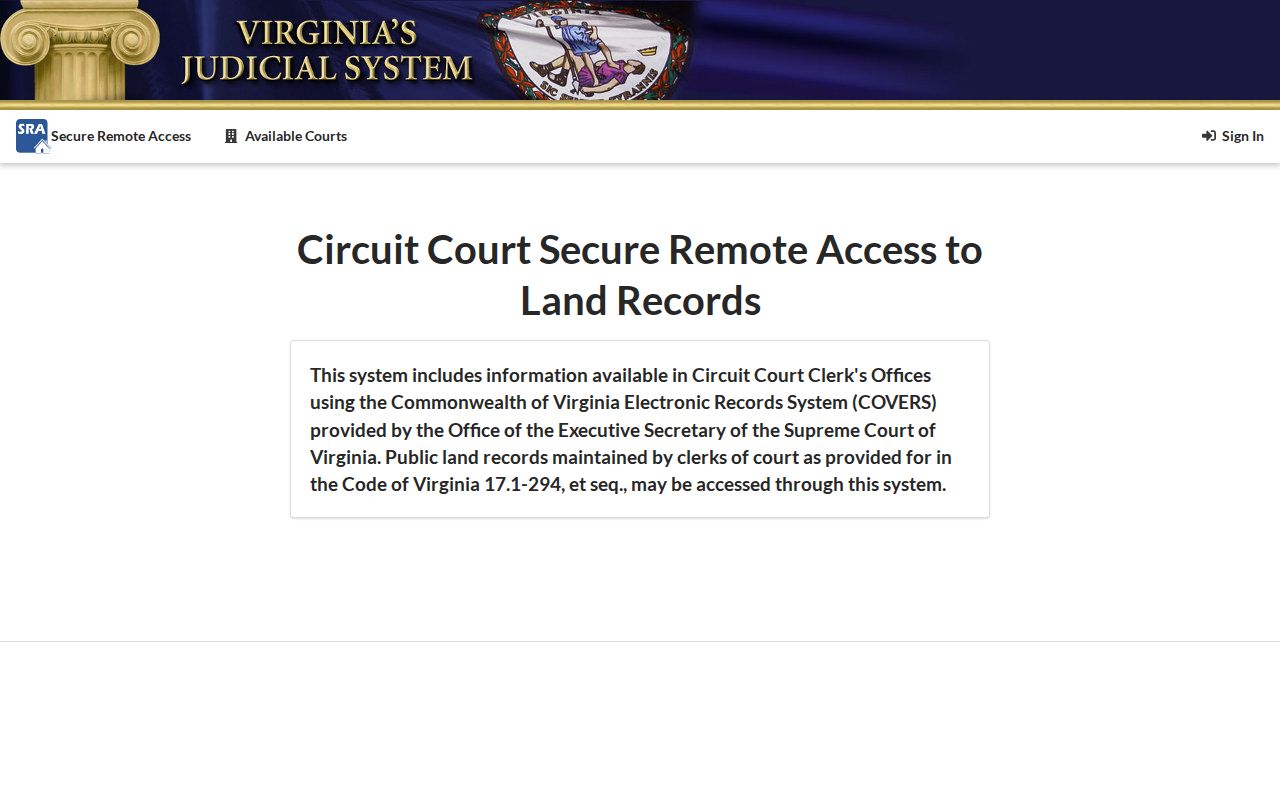
The grantor-grantee screen leads to parties and filings, so read each instrument to confirm the same parcel.
Estate Divisions in Campbell Records
Land can pass through an estate division rather than a sale. Campbell's LVA catalog holds fiduciary bond books for 1850-1859 and 1870-1904, plus commissioner and receiver books from 1888-1981. Deed books also carry estate divisions and caveats beside ordinary conveyances.
A name that vanishes from a deed chain may signal a fiduciary transfer. Check for an executor, administrator, trustee, or commissioner. The Circuit Court Clerk keeps probate and land records. A will or estate file explains the authority, and a fiduciary deed or recorded order ties it to the parcel.
Campbell County Plats and Lot History
Plat indexes at the LVA run from 1884 through 1981. Older plats hide in deed books and wills. A plat shows how a tract became lots. It can also preserve a subdivision name missing from today's address. Match the plat to the deed description and the current Map ID. Only then treat a lot as the same parcel.
Campbell's GIS tax outline is a present-day layer. It does not prove a historic lot line never moved. A chain that shifts from acreage to lot and block calls for the recorded map. Find also the deed that adopted it.
The Library of Virginia's plat indexes span 1884 to 1981. Earlier maps may sit in deeds or wills. A modern Map ID can cover land assembled from older lots. Record the old subdivision or lot label. Then verify the instrument that combined or divided the land. That step pays off when the current address resembles nothing in a former owner's deed.
Campbell County Death and Probate Records
A death often explains a deed. When an owner dies, the land usually moves through an executor, administrator, trustee, or heir, and those names show up in later Campbell County property records. Virginia seals death records for 25 years. After that, they open to the public, and a certificate can confirm the death event itself, though it never transfers land on its own. Earlier records stay restricted to eligible immediate family with identification and a fee.
Campbell's Circuit Court Clerk handles the probate side. Wills, administrator appointments, trustees, and guardians all pass through that office, and the probate papers establish who held authority over the estate. Pair them with the recorded deed to see how the parcel actually changed hands. The Virginia Vital Records application page spells out the state request route for a death certificate.
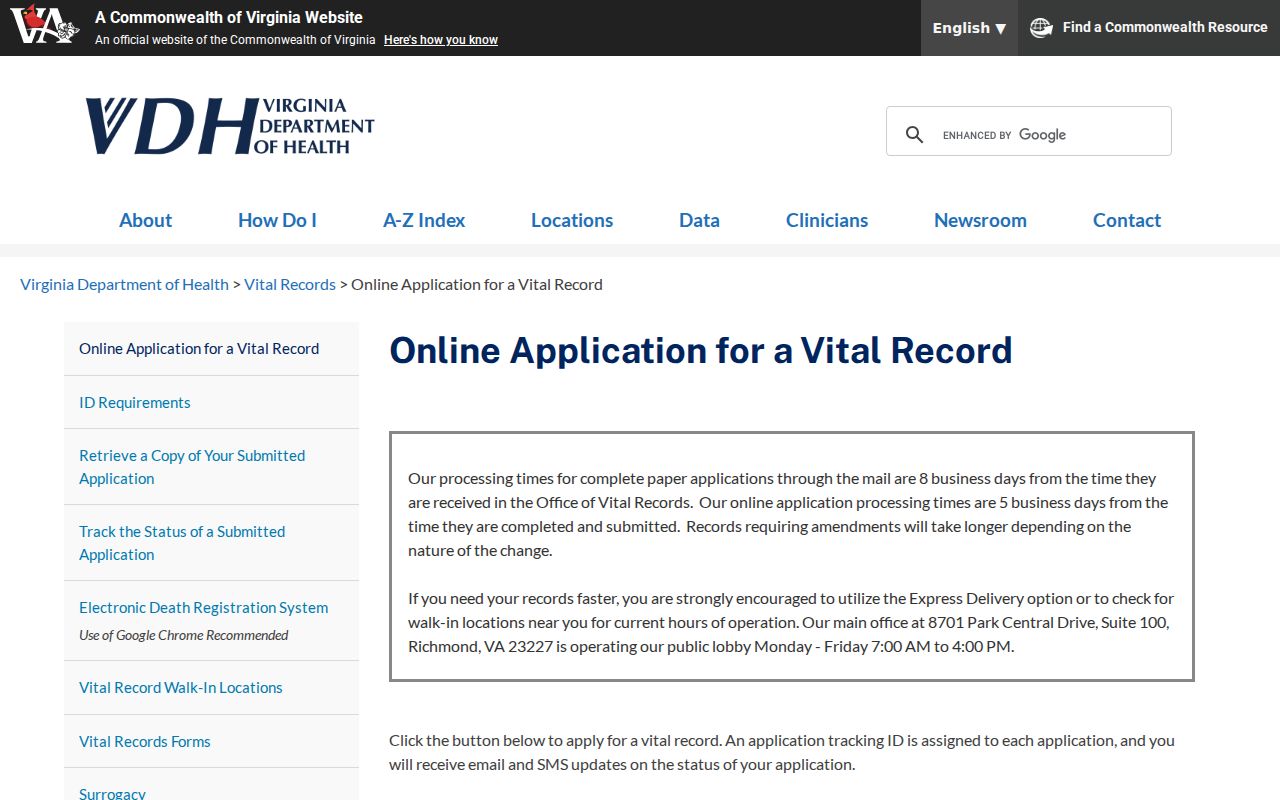
The state application page covers only the death certificate. For the land itself, the recorded deed and the probate file in Campbell County property records remain the sources that matter.
How Far Back Campbell County Records Go
Campbell County's deed books have a documented historic starting point of 1782. The general grantor-grantee indexes at the LVA reach through 1896, and those years describe the cataloged paper holdings rather than the starting year of Campbell's current online SRA access. No official source publishes the courthouse-loss history or an imaging cutover date. Assume no gap in the property records on that basis.
Lawful use. Use Campbell County ownership history for house research and property diligence. Do not use an old owner name or address to track, intimidate, or harass a living person.
Campbell County Book and Page Bridges
A book-and-page reference or instrument number points straight to the recorded document. Keep it next to the grantor and grantee names, the record date, and the full legal description. If the chain pulls in a plat, a will, or an estate division, note that reference as well. The next property search then starts from a source instead of a half-remembered street name.
The county's microfilm catalog runs deep. The online image range and local copy fees are not published online. Call the Clerk at (434) 332-9517 or visit 732 Village Highway, P.O. Box 7, Rustburg, VA 24588 during court-office hours when an index entry has no image.
Virginia Courts lists the clerk's office hours as 8:30 a.m. to 4:30 p.m. Write down the grantor, grantee, approximate year, and the volume, page, or instrument number before you go. Those details let staff find the record fast. They also tell an original book request from an online image or certified copy.
The Campbell County deed-records route covers single-document index and copy access. This page follows former owners through time.